


Linda Berberich, PhD - Founder and Chief Learning Architect, Linda B. Learning, in ritual
Hi, I’m Linda. Thanks so much for checking out the final edition of my Linda Be Learning newsletter for 2025. If you are just discovering me, I encourage you to check out my website and my YouTube channel to learn more about the work I do in the field of learning technology and innovation.
Last month I introduced SkoBots, the first Indigenous robot designed entirely by Indigenous leaders. It’s a wearable, customizable, and interactive language learning robot for Indigenous youth that senses motion, speaks in the endangered Indigenous language Anishinaabemowin, and utilizes ethical, sustainable, and internally developed AI.
As someone deeply tied to her own Indigenous roots from another continent (whose native language was lost in translation, I might add) and growing up as an activist for the Indigenous peoples whose land we occupied in my youth, Indigenous language technology was naturally attractive to me. As I dug in to some of the work I’ve done in this area, I realized I could devote an entire edition to it. So that’s what we’re doing this final month of 2025.
In this month’s edition, we’ll explore Indigenous-led language technologies and learning methodologies.
Tech to Get Excited About
I am always discovering and exploring new tech. It’s usually:
recent developments in tech I have worked on in the past,
tech I am actively using myself for projects,
tech I am researching for competitive analysis or other purposes, and/or
my client’s tech.
This month, I’m taking a bit of a departure. I’m going to instead introduce you to a fund that was developed to reignite interest and center Indigenous ingenuity and redefine what we mean by “technology.”
The Pawanka Fund
The Pawanka Fund is an Indigenous-Led effort striving to support and empower Indigenous peoples around the globe. It was created as the Indigenous Ways of Knowing and Learning Fund in September 2014 in the midst of the United Nations World Conference on Indigenous peoples. “Pawanka” is a Miskitu word meaning “growing and strengthening.”
Pawanka responds to the needs of Indigenous peoples building relationships of trust, networking and promoting articulation between local and global processes. They provide direct support to community led organizations for the recovery and revitalization of indigenous knowledge and learning systems in seven sociocultural regions of the world including North America, Latin America, Asia, Africa, Arctic, Pacific, and Russia.
Discourse concerning the importance of preserving our natural world has increased, as has the push and pull of innovation: invention, design, and iteration, but before these concepts became trendy, Indigenous communities valued and practiced these beliefs.
Practical inventions, such as Inuit snow goggles carved from bone antler, the Mi’kmaq toboggan for transportation, the use of willow as an anti-inflammatory, or the application of raw bitumen to waterproof Cree and Dene canoes, demonstrate an advanced understanding of science, technology, and innovation. These fundamental principles of Indigenous wisdom date back to antiquity and have been developed over more than 15,000 years.
Indigenous technology is a relatively misunderstood phenomenon. It is not about the use of technology by or for the benefit of Indigenous peoples. It refers to the many ways in which Indigenous knowledge is used to improve human lives: ancestral practices that have existed in various parts of the world and are still relevant and prevalent today.
Indigenous knowledge and technology have been linked since the beginning of time. The fundamental concepts of Indigenous knowledge can and should underpin the development and role of technology in multiple ways.
Examples include Indigenous foods and food technology that have sustained Indigenous communities around the world for thousands of years. Today, they are used in a variety of ways, including connecting people to culture through culinary experiences.
In terms of agriculture and aquaculture, thousands of years ago, the Gunditjmara people of Budj Bim in western Victoria modified natural features and created series of artificial ponds, wetlands, and canal networks. These practices allowed water to flow between dams to accommodate eel farming, and they also built substantial stone structures near work sites to provide shelter from the cold southerly winds.
There is no doubt that Indigenous technology and innovation is part of the daily life of their communities, and the importance of its recognition and preservation to help indigenous peoples and the world.
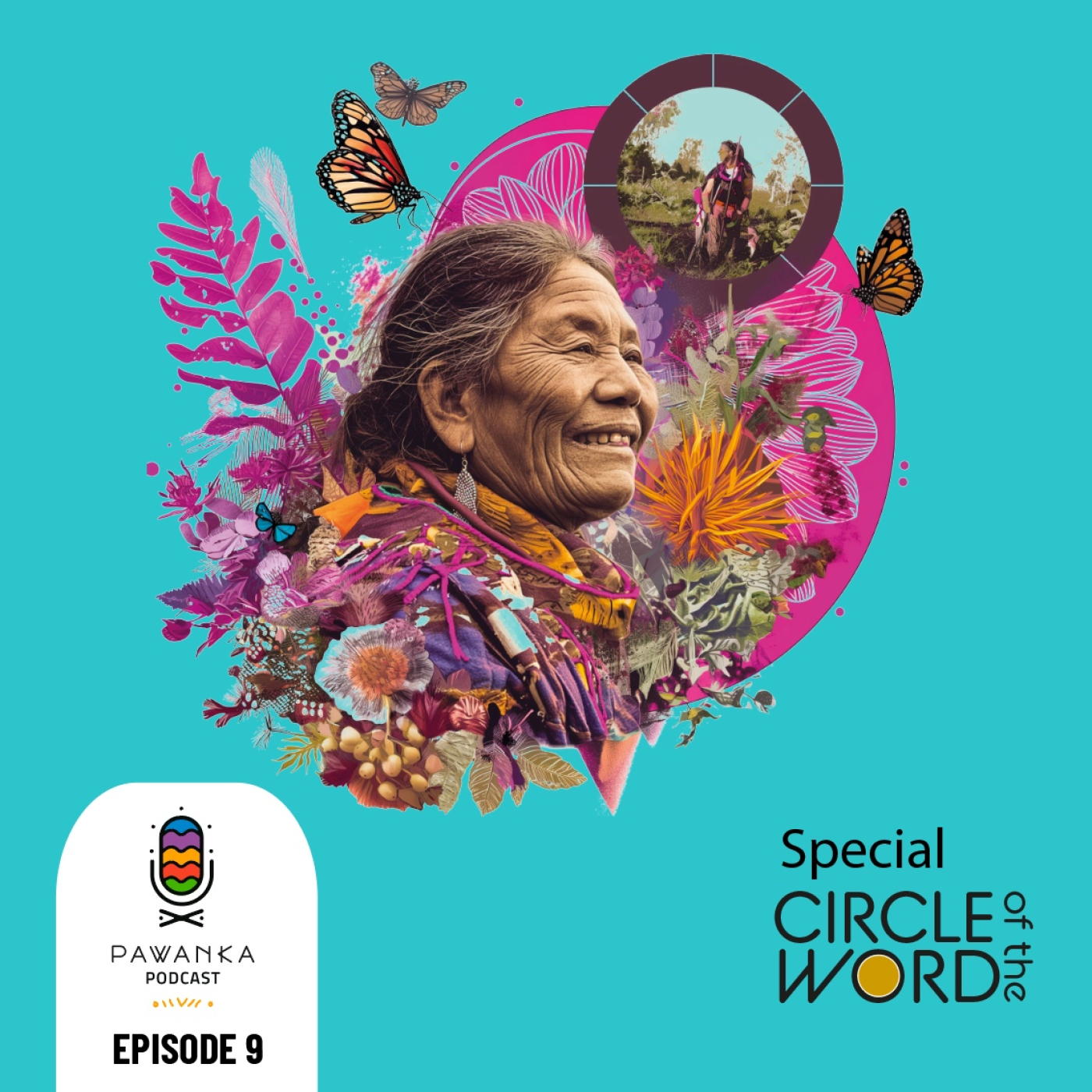
Subscribe to the Pawanka Fund podcast to learn more about their language revitalization efforts.
Technology for Good
When you lose your language, you lose your culture. This fact has never been lost on Indigenous populations. And this is why so much effort had been put into language reclamation, and, in some cases, using technology for that purpose. One AI researcher in particular, Michael Running Wolf, has been in a leader in this area.
In this video, he describes not only why this approach is beneficial to Indigenous children, but also to the population at large.
Running Wolf holds a deep understanding of both the technology underlying AI and the societal benefits it could unlock. As the son of Lakota and Cheyenne parents, he also knows how technology and data have been weaponized to harm Indigenous communities. Running Wolf therefore approaches his work — in which he revitalizes disappearing languages using AI and virtual-reality tools — with patience, empathy and a healthy dose of skepticism.
For his master’s thesis, Running Wolf drew inspiration from the work of researchers who had used oral histories to trace the origins of tales such as Little Red Riding Hood and to identify items eligible for repatriation under the Native American Graves Protection and Repatriation Act. He spent the summer of 2014 in Siberia, Russia, collecting stories from local Indigenous peoples and using natural language processing to look for similarities between their cultures and those closer to his home.
Around this time, Running Wolf also met his wife Caroline, a member of the Apsáalooke Nation who speaks 11 languages and was then earning her master’s degree in Native American studies. Together, the two became consumed by thoughts of how computational tools and big data could be used to improve understanding of Indigenous cultures and to reclaim lost languages. The United Nations estimates that roughly half of the world’s 6,700 languages — the majority of which are spoken by Indigenous peoples — are on track to disappear by 2100, yet Running Wolf says there are rarely rigorous plans in place to save them.
Caroline has since joined him in co-founding an Indigenous non-profit technology firm called Buffalo Tongue and in managing ongoing projects focused on the applications of AI and immersive technologies for reclaiming Indigenous languages and cultures.
Indigenous languages differ from those with Latin roots in ways that make them a challenge to reconcile with existing machine-learning frameworks. Many Western languages follow a subject–verb–object sentence structure, whereas Indigenous languages tend to be verb-based and polysynthetic, meaning that a single word can include multiple elements that, in English, would be written out as entire sentences. ‘Bird’, for instance, might translate to something like ‘the winged, flying animal that caws’.
Because generative AI models predict the next word in a sentence on the basis of the preceding words, these differences mean that algorithms often do a poor job of recognizing and translating Indigenous languages. However, models perform better when they include Indigenous languages,because training on a greater diversity of data ultimately makes the underlying algorithms more adaptive and flexible, just as people who know two languages typically have an easier time learning a third.
But that does create a risk for communities when their language data are suddenly valuable. There already has been a rush by companies such as OpenAI, Amazon and Google to gain access to Indigenous data on language. In their usual extractive form, these copanies use that information to develop services and products that are then offered back to users at a cost. Long-standing mistrust over how their information is misused has caused some Indigenous communities to disavow themselves of ever turning to AI-based technologies, an understandable stance. When research is conducted without consent, it sours people on even trying to engage. There’s a lot of risk with AI - it’s a healthy response.
Running Wolf is working to overcome these hesitations through creating resources by and for Indigenous communities that help to educate them both about their cultures and the technology and, in turn, give them more control over how their data are used.
His early efforts began as employee network groups, including one for Indigenous researchers at Amazon when Running Wolf was there working on the company’s AI-powered assistant, Alexa. Later, he and Caroline were involved in launching two wider initiatives, Indigenous in AI and IndigiGenius. These partner with peer groups such as the information-technology consultancy firm Natives in Tech in Oklahoma City, Oklahoma, the Indigenous Protocol and Artificial Intelligence Working Group and the Abundant Intelligences research project to shape the future of Indigenous-led AI efforts. The Running Wolfs worked with dozens of other researchers to produce this paper outlining how best to ethically design and create AI tools.
Tech Retrospective: How Indigenous Languages Are Lost
Many actions throughout history put pressure on tribal communities to abandon the use of their languages. This included the forced assimilation that resulted from colonizer governmental policies such as The Indian Civilization Act of 1819 in the US and The Indian Act of 1876 in Canada. These acts established residential schools to teach subjects such as math and science while suppressing the use of Indigenous languages and cultures.
Residential schools lasted well into the 20th century, and their effect was devastating for Indigenous communities and their languages. Linguists have estimated that prior to European settlement, there were 300 Indigenous languages spoken in what is now the United States. Communities are struggling to pass these languages on to a younger generation.
These affected communities lose the last speakers of their languages in part due to these assimilation efforts, but also due to forced relocation. The latter caused the community to become fragmented due to some families remaining behind or being exempt from relocation.
These factors also increased the stress on the community to simply survive. Many tribal members and elders from this time have recounted how they didn’t pass the language on to their children for fear of discrimination.
Bringing languages back helps make Indigenous peoples whole again. When their cultural selves are empowered through speaking their own languages, we begin to undo the damage caused by years of cultural and linguistic oppression. For many tribes, language and cultural revitalization is a priority. Significant time and financial resources are put into educational programs that help tribal citizens reconnect to their cultural heritage.
When Indigenous peoples engage in revitalization activities, they are weaving strands of knowledge, cultural practices and other ways of being into their lives so they may draw on them as a source of community strength. Today, this encompasses all aspects of their lives, including art, games and food, as well as song and dance.
Since 1972, Miami University has been an important partner in this process of language and cultural revitalization for the Myaamia language, a tribe historically based in the Ohio-Indiana region prior to forced reloaction to Kansas, and eventually Oklahoma. The Myaamia Center – the tribe’s research arm – directly supports the Myaamia Heritage Program. The program provides students with tuition waivers and a unique opportunity to engage with their cultural heritage while earning a college degree.
Myaamia tribal youth who participate in language and cultural revitalization programs are more engaged in tribal activities, internal assessment research shows. Participation has continually risen over the past 20 years, in part due to increased tribal enrollment encouraged by language and cultural revitalization. Engagement is increasing because people want to be involved and participate in what is happening. This is a significant development because youth engagement is important to future growth of the tribal nation.
Just as residential schools were designed to remove language and culture, tribal efforts like those undertaken by the Myaamia tribe can put back what was taken.
But these efforts require financial resources. Some people feel that the federal government holds a degree of financial responsibility in the revitalization of these languages. This is because significant federal funding was used historically to eradicate these languages. The federal government spent US$2.81 billion – adjusted for inflation – to support the nation’s residential schools, but only a fraction of that amount for Indigenous language revitalization today.
Partnerships between tribes and universities can be powerful in building a response to inequalities that have emerged through our recent history. Language is an important part of what can be done, but in the end it’s about knowledge, who holds that knowledge and how it’s expressed through our unique language and culture. Partnerships such as this one with Miami University is one such model.
Learning Theory: Crash Course Native American History
But it’s not enough for Indigenous populations to reclaim their language and heritage. It is also incumbent on the descendents of colonizers to understand their colonial history through Indigenous eyes. And thanks to technology platforms, we no longer have to rely on colonized countries and their governments to “do the right thing” and teach this historical perspective in their school curricula. For those interested in American history from Indigenous perspectives, allow me to introduce you to Crash Course Native American History.
In 24 episodes, host Che Jim introduces you to the deep, ongoing history of the Indigenous peoples in what’s now known as the United States—from time immemorial to the Land Back movement. These videos were developed with a team of Indigenous experts and are based on an introductory college-level curriculum.
By watching these videos, you will better understand the political and legal relationship between Indigenous nations and the U.S. government. They will help you develop an informed perspective on distinct Indigenous cultures’ traditions, practices, and worldviews and draw connections between the past and present in the continued existence and experiences of Indigenous individuals and nations. You may even discover key figures in Native American history you were previously unaware of, and learn of their achievements and contributions.
Definitely a series not to be missed!
Check It Out Before It’s Gone
Here is your last chance, before Dec 31, 2025, to check out Encoded - an Indigenous augemented reality (AR) intervention at the Metropolitan Museum of Art. A first-of-its-kind exhibition and intervention, the Met’s American Wing is transformed with artworks and immersive soundscapes by leading Indigenous artists from across Turtle Island (aka North America). New works reframe iconic pieces of American art history through an Indigenous lens, using your own smartphone.

Download the zine to preserve the work after 2025.
That’s all for now. I hope the insights from this final newsletter of 2025 have given you a fresh perspective of Indigenous technology and how ancient practices mixed with modern technology can benefit all of us.
See you next year!

A reminder…
